
When you search for “excavator hire near me,” you’re looking for a reliable local service that can get the right machine to your site on time. The key is finding a partner who not only has the equipment but also understands your project, whether it’s a small garden update or a large commercial development.
This guide offers practical advice for your next project in Norfolk or Suffolk.
Your Guide to Hiring an Excavator in East Anglia
Hiring an excavator is often central to any construction, groundworks, or major landscaping project. The decision you make will directly affect your timeline, budget, and the quality of the final job. This is especially true in East Anglia, where projects range from tight-access residential work in historic Norwich to large-scale agricultural earthmoving across the Suffolk countryside.
Choosing the right hire company is about more than just finding a machine; it’s about securing a reliable service. A good local provider offers expert advice, ensuring you get an excavator that’s powerful enough for the job but not so large that it becomes a costly burden on your site.
Why Local Expertise Matters
Working with a local specialist gives you an immediate advantage. They understand regional ground conditions, from the sandy soils of the coast to the heavy clay inland. This local knowledge helps you anticipate challenges before they arise, keeping your project running smoothly.
A local company can also offer faster and more flexible delivery and collection, which is vital when you’re on a tight schedule. For more regional insights, check out our resources on plant hire in Norfolk.
A Growing Market for Plant Hire
The demand for reliable plant and machinery hire is strong across the UK, reflecting a busy construction sector. The UK construction equipment rental market is a significant industry, with earthmoving machinery like excavators making up the largest share.
This growth shows how important it is to choose an established, professional hire partner. You can explore the data behind this trend and read the full research on the construction equipment rental market for more details.
A successful project depends on having the right tools at the right time. Your choice of excavator hire provider is one of the most important decisions you will make, directly influencing efficiency and cost from day one.
Matching the Right Machine to Your Project
Picking the wrong size excavator is a common mistake. It can either slow your project down or blow your budget. A machine that’s too small will struggle, adding hours or even days to your schedule. On the other hand, an oversized digger means you’re paying for power you don’t need and creating access and ground disturbance issues.
The goal is to find the perfect fit for your specific job. It all starts with looking at three things: the scale of your task, the space you have to work in, and the materials you need to move. Whether you’re a homeowner tackling a garden makeover or a contractor starting a new build, getting this choice right is vital.
This quick decision tree helps you visualise the key questions to ask when you’re looking for excavator hire.
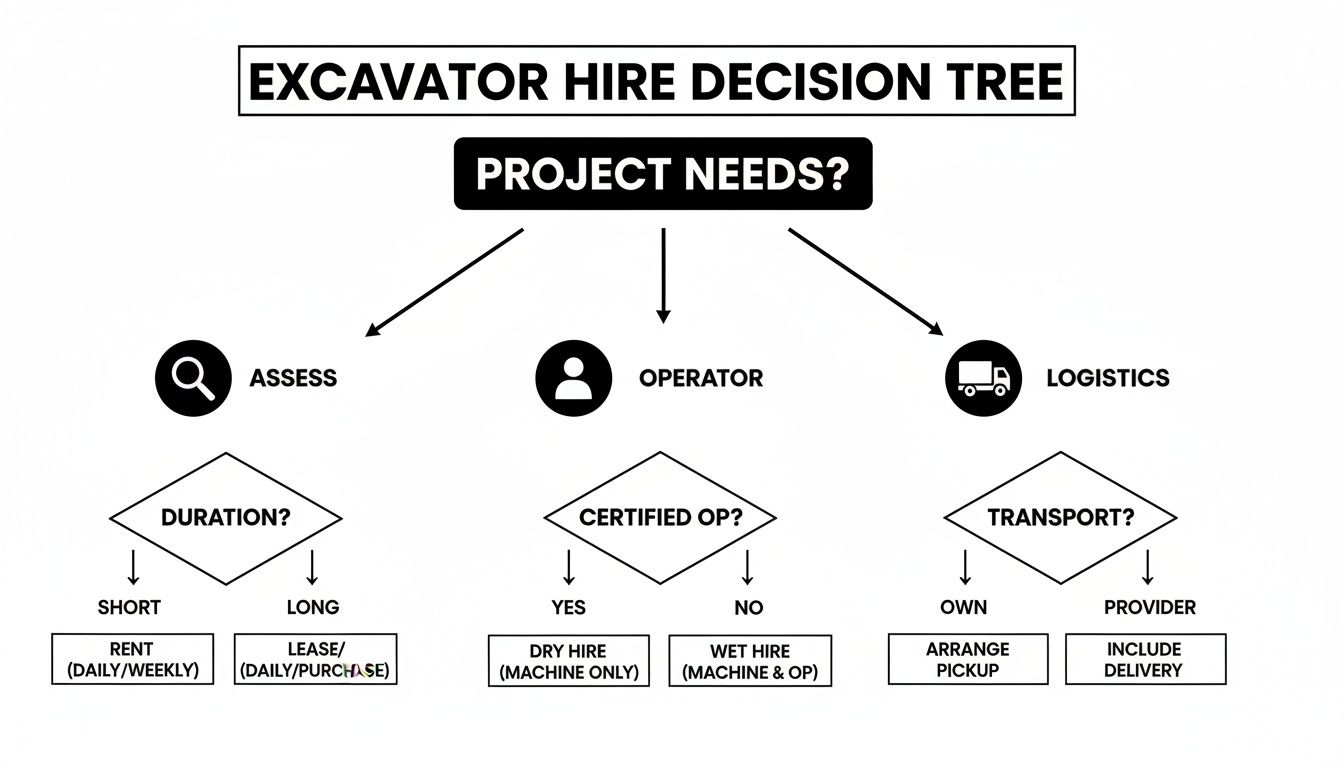
As you can see, a successful hire is about more than just the machine. It’s about assessing your needs, deciding on operator requirements, and sorting out site logistics in advance.
Choosing Your Excavator Size and Attachments
To make things easier, here is a quick guide to our most popular excavator sizes. It covers what they’re best for and which attachments pair well with them, helping you match the machine to the job.
| Excavator Class (Weight) | Ideal Project Type | Common Attachments | Key Benefit |
|---|---|---|---|
| 1.5 to 3-Tonne | Garden landscaping, driveway prep, small footings, utility trenches. | Breaker, Auger, Grading Bucket | Fits through tight spaces like garden gates. |
| 5 to 8-Tonne | House extensions, foundation digging, small demolitions. | Grab, Breaker, Riddle Bucket | A versatile all-rounder for most building sites. |
| 13 to 20-Tonne | Large-scale earthmoving, deep excavation, commercial groundwork. | Breaker, Grab, Heavy-Duty Buckets | Maximum power and reach for big jobs. |
The right combination of digger and attachment turns one machine into a multi-tool, saving you time and money. If you’re ever in doubt, just give us a call to talk through your project specifics.
For smaller jobs like digging footings for a garden wall or clearing an old patio, a micro or mini excavator is the best choice. Our 1.5 to 3-tonne machines are compact enough to fit through a standard garden gate but still pack a punch when it comes to digging. You can find out more in our guide on using a compact excavator for driveways and gardens.
When you move up to medium-sized projects, like foundations for a house extension or digging utility trenches, you’ll need more reach and power.
- 5 to 8-Tonne Excavators: These are the real workhorses of our fleet. They are perfect for most residential and smaller commercial construction sites, striking a great balance between power and manoeuvrability.
- 13 to 20-Tonne Excavators: For big jobs like major earthmoving, large-scale site clearance, or deep excavation work, these larger machines provide the raw power you need to get the job done quickly.
The rule of thumb is simple: match the machine’s power to the volume of material you need to move and the depth you need to dig. Overestimating can be just as costly as underestimating.
Getting the Right Attachments
An excavator’s real strength lies in its versatility, which comes from its attachments. Hiring the right ones can turn a single machine into a multi-purpose tool. This saves you the cost and hassle of hiring separate equipment. Whether you’re one of the many general contractors handling varied tasks or a specialist focusing on one area, knowing your options is key.
Here are a few of the most common attachments we supply:
- Breakers: Essential for breaking up old concrete, rock, or tarmac.
- Augers: Perfect for drilling precise, clean holes for fence posts or planting trees.
- Grabs: Ideal for handling awkward materials like demolition waste, logs, or green waste.
- Specialist Buckets: These include grading buckets for a smooth, level finish or riddle buckets for separating soil from rubble on site.
Before you book, it’s always worth having a quick chat with us about what you want to achieve. We can recommend the best combination of machine and attachments to ensure your work gets done safely and efficiently.
How to Prepare Your Site for a Smooth Hire
A successful excavator hire starts long before the machine arrives. Getting the site ready is a vital step to ensure safety, prevent delays, and make sure work can begin straight away.
Get this part right, and your project will get off to a flying start.
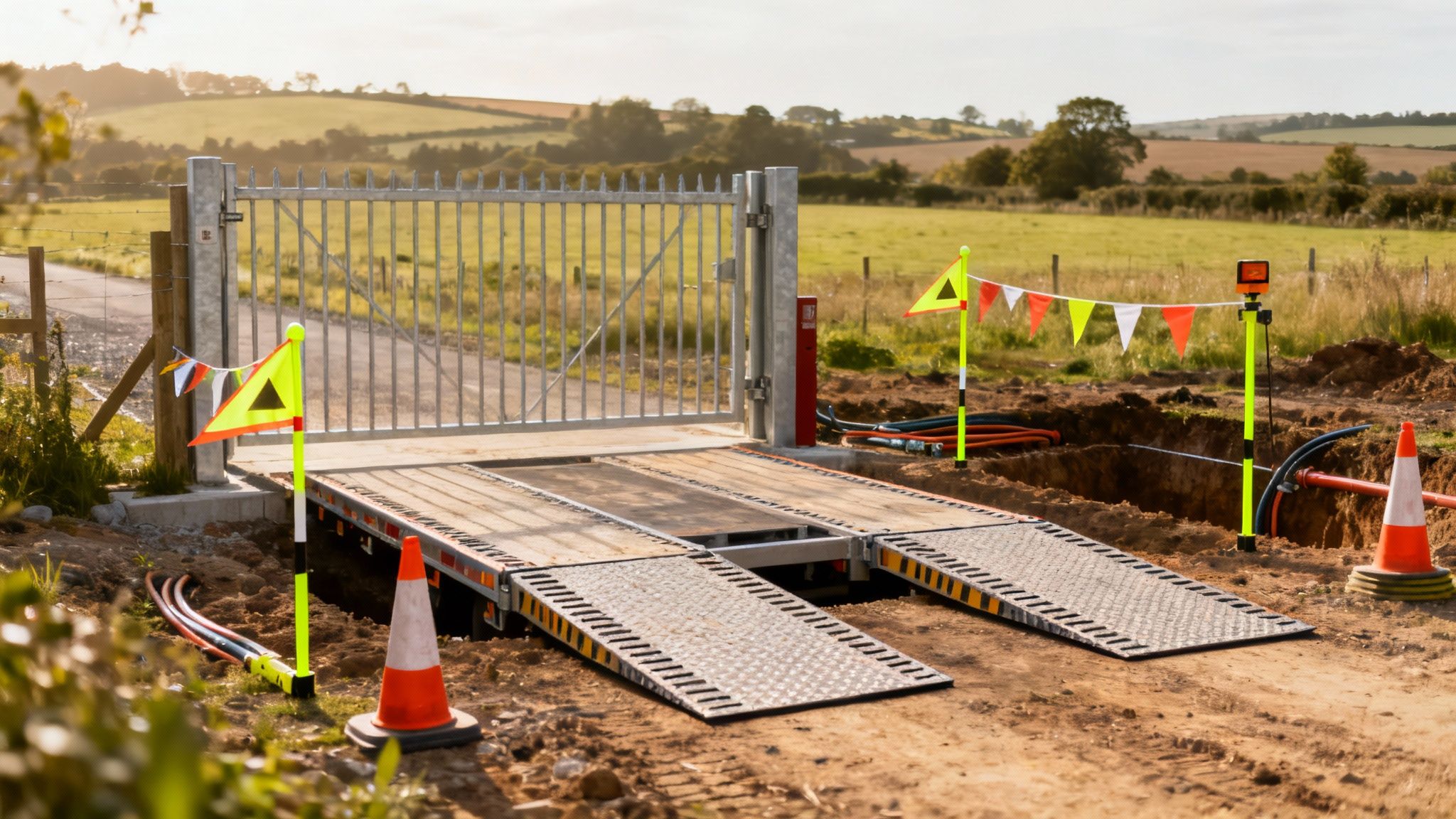
The first and most crucial job is a proper access check. The low-loader delivering the excavator needs plenty of room. You’ll need to measure gate widths, look for tight corners, and check for overhead obstructions like low-hanging branches or power lines. The ground must also be firm enough to take the weight of a heavy delivery vehicle.
Uncovering Hidden Dangers
Once you know the machine can get in, the next priority is finding out what’s underground. Hitting a buried utility line is incredibly dangerous. It can also lead to huge repair bills and bring your project to a halt.
Before a bucket touches the soil, you must locate all underground services. This is non-negotiable. The best way is to use a Cable Avoidance Tool (CAT scanner) and get the official utility maps for the area.
Forgetting to scan for buried services is one of the most expensive and dangerous mistakes you can make. The few hours spent on a thorough survey are nothing compared to the potential cost of a utility strike.
Establishing a Safe Working Area
Once the excavator is delivered, safety becomes paramount. Setting up clear safety rules isn’t just good practice; it’s a legal requirement. This means creating a secure working environment before the operator starts the engine.
A few simple preparations make a big difference:
- Set Up an Exclusion Zone: Use cones or barrier tape to clearly mark out the excavator’s maximum reach. No one should enter this zone unless they are the operator or have been given clear permission.
- Provide the Right PPE: Ensure everyone on site has the correct Personal Protective Equipment (PPE). This means hard hats, high-visibility clothing, and steel-toed boots as a minimum.
- Hold a Toolbox Talk: A quick safety briefing before work starts ensures everyone understands the rules and is aware of the machine’s movements.
Taking these steps will help your search for excavator hire near me end in a successful project. By checking access, scanning for utilities, and setting up a secure work zone, you lay the groundwork for an efficient hire free of nasty surprises.
Understanding Your Hire Costs and Contract
Getting a clear, accurate quote for your excavator hire is a vital step. It helps you avoid unwelcome surprises that could damage your project budget. A detailed estimate should show you exactly what’s included in the hire rate and where any extra charges might appear.
Breaking Down the Standard Charges
When you get a quote from a reputable plant hire firm, it typically covers the essentials. Think of these as the core parts of your hire agreement:
- Machine Hire: The cost for your chosen excavator and any standard attachments for the agreed period.
- Transport: The fee for delivering the machine to your site and collecting it once the job is done, within our Norfolk or Suffolk service areas.
- Basic Maintenance: Our machines are regularly serviced, so routine checks and normal wear and tear are factored into the price.
- Operator Fees: If you choose an operated hire, this cost will be listed separately. It covers the wages for one of our skilled, certified operators.
Where Additional Fees Might Apply
Sometimes, a project’s specific needs mean extra costs are unavoidable. It’s best to be aware of these from the start:
- Fuel Top-Ups: Our machines usually come with a set amount of diesel. If your work uses more than this, you’ll be charged for the extra fuel.
- Permit Costs: Certain sites may need special permissions, like a road closure licence. These costs are passed on to you.
- Extended Hours: If the job overruns the booked period, extra charges for the additional time will apply.
- Site Access Issues: If we need special vehicles to get the excavator onto a site with very tight or tricky access, there may be an extra charge.
To get the most precise quote, it helps to share details like access photos, ground conditions, and planned dig depths right from the start.
The plant and machinery rental market is a good indicator of industry health. It’s projected to grow at a compound annual growth rate of 4.58% from 2025 to 2035, expanding from USD 5.75 billion in 2025 to an estimated USD 9.0 billion by 2035. You can dig deeper into machinery rental market growth on IbisWorld.
When comparing quotes, lay them out side-by-side. It’s the easiest way to spot hidden fees before you commit.
Understanding CPA Model Conditions
Almost all plant hire in the UK operates under the CPA (Construction Plant-hire Association) model conditions. They are the industry standard because they make everything clear for both parties.
- Under these terms, insurance is your responsibility as the hirer. You’ll need to arrange Hired-in Plant Cover.
- Liability for any damage to third parties is clearly defined, which reduces confusion if an incident occurs.
- Maintenance duties are also split. Routine daily checks are the hirer’s job, while the hire company handles major repairs.
We’ve put together a full guide on this topic. You can learn more about CPA hire agreements in our post on excavator hire construction contracts.
Pro Tips for Getting an Accurate Quote
To help us give you a sharp, accurate price without delay, here’s what we find most helpful:
- Document your site access. Photos and measurements of gates or narrow paths are perfect.
- Be clear from the start whether you need just the machine or a price that includes one of our operators.
- Ask about the fuel policy. Confirm what’s included and how extra usage is charged.
The Information We Need From You
To speed things up and provide a reliable quote, please have this information ready:
- The full site postcode, plus photos of access points and gate width measurements.
- A description of the ground conditions – is it heavy clay, soft sand, or hard-packed soil?
- The exact dig depth you need and a rough idea of the volume of material to move.
- Your planned working hours, including any weekend or evening work.
Providing these details upfront makes the whole process smoother and faster.
A Quick Look at Hire Rates
To give you a rough idea, pricing often gets better the longer you book a machine.
| Duration | Typical Rate (exc VAT) |
|---|---|
| 1 day | £250 |
| per week | £1,200 |
| per month | £4,000 |
This table shows how costs can decrease with longer hire periods, which is useful when budgeting for a larger project. A little planning goes a long way.
The Advantage of Using a Local Hire Specialist
When you search for “excavator hire near me,” you want more than just a machine. You want a reliable local partner who understands the ground you’re working on and can react quickly. This is where a local specialist like Aylsham Plant Solutions stands apart from the big national chains.
Working with a company based in Norfolk and Suffolk brings real-world benefits. We have first-hand knowledge of the region’s ground conditions, from sandy coastal soils to heavy inland clays. This local insight helps us advise you on the right machine and attachments for your site, preventing problems before they start.
Faster Delivery and Lower Transport Costs
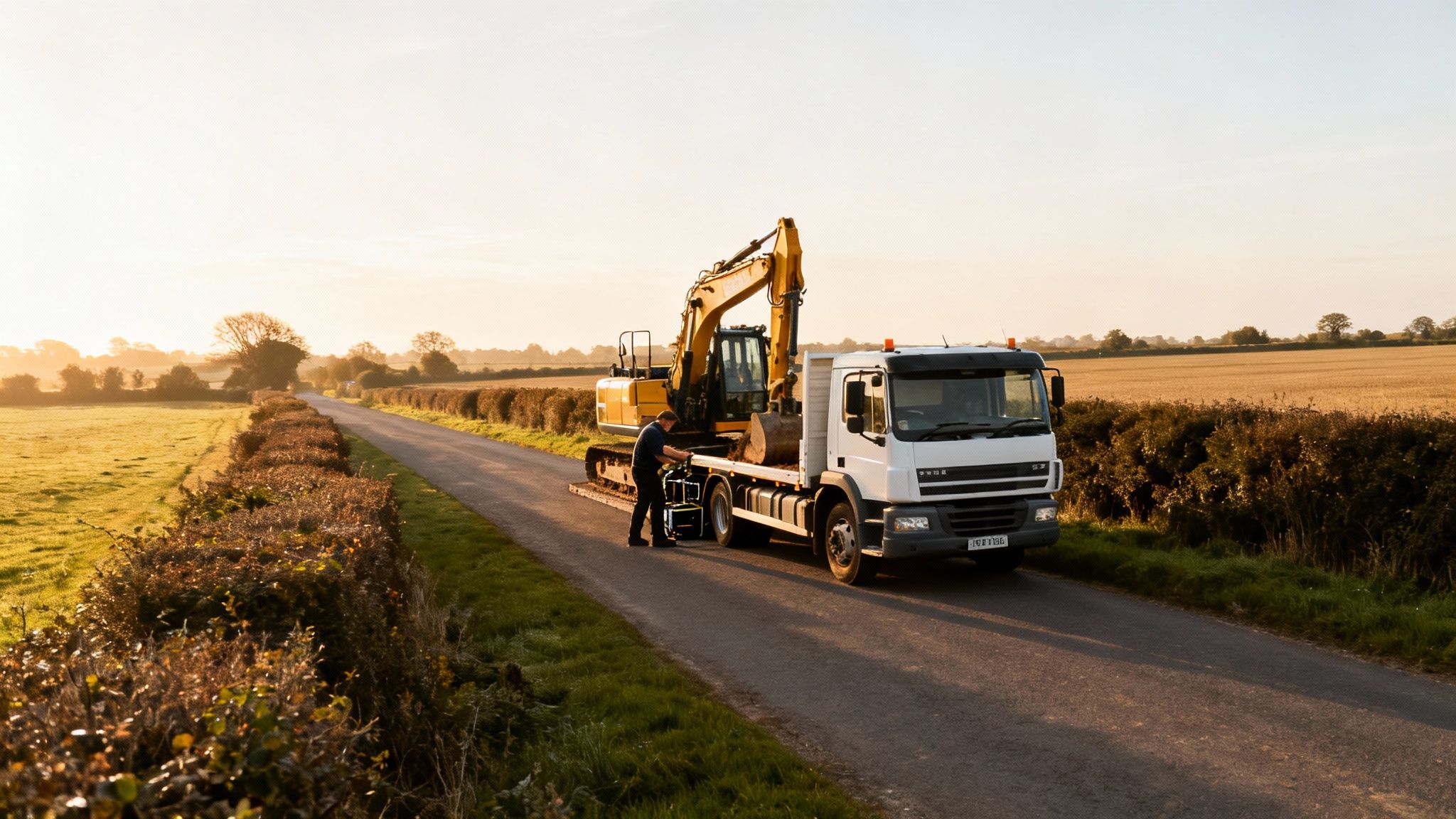
One of the biggest perks of hiring locally is logistics. Because we are based in East Anglia, our transport routes are shorter. This offers two key advantages for your project.
First, it means lower transport costs. We don’t have to build long-distance haulage fees into our prices, which keeps your quote competitive. Secondly, it leads to faster, more flexible delivery. We can often get a machine to your site much quicker than a national firm, helping you stick to your schedule.
Choosing a local hire company isn’t just about convenience; it’s a smart decision for your budget and timeline. Proximity means a faster, more responsive service.
Superior Machinery and Responsive Support
To get the job done right, you need reliable and precise equipment. We invest in a modern fleet of excavators, and many of our machines are fitted with GPS technology. This improves digging accuracy, reduces the need for rework, and saves you time and money on fuel and labour.
Of course, even the best-maintained machinery can have issues. In the unlikely event of a breakdown, our local presence is your safety net. We can get a mechanic to your site far more quickly than a company based hours away. This commitment to responsive support means:
- Minimal Downtime: We’ll get you back up and running fast.
- Expert On-Site Assistance: Our team knows these machines inside out and can solve problems efficiently.
- Machine Replacement: If a quick fix isn’t possible, we can arrange for a replacement machine to be delivered promptly.
A Partner Invested in Your Success
When you choose a local specialist, you’re working with a team that is part of your community. We are invested in the success of projects across Norfolk and Suffolk because this is our home, too. Our reputation is built on being dependable and on the strong relationships we have with local contractors, builders, and homeowners.
When you hire from Aylsham Plant Solutions, you get more than just an excavator. You get a dedicated partner committed to giving you the right advice, the best equipment, and the responsive service to make sure your project runs smoothly.
Got Questions About Hiring a Digger?
Understanding excavator hire can seem tricky at first. To help, we’ve put together simple answers to the questions we hear most often from clients across Norfolk and Suffolk.
Knowing the basics beforehand helps ensure everything runs smoothly.
Do I need a licence to operate a mini digger on private land?
If you’re working on your own private property with no public access, you don’t legally need a formal qualification like a CPCS card. However, you absolutely must be competent to use the machinery safely. Competence means understanding the machine’s limits, potential hazards, and how to do proper safety checks.
If you have any doubt, it’s not worth the risk. For any commercial site, certification is essential. For safety and efficiency, we almost always recommend using one of our experienced, certified operators.
What insurance do I need to hire an excavator?
This is a crucial point many people miss: from the moment a machine is delivered, you are responsible for it. Your standard public liability insurance almost certainly won’t cover hired-in plant and machinery.
You need a specific policy called ‘Hired-in Plant Insurance’. It covers you for theft, damage, and loss. This is not an optional extra; it’s a standard requirement under the CPA hire agreement. It is vital to arrange this before the machine arrives.
Taking out the correct Hired-in Plant Insurance is non-negotiable. It protects you from potentially huge costs if the machine is stolen or damaged and is a fundamental part of a professional hire agreement.
How much notice should I give to hire an excavator?
We always try to be flexible, but some advance warning is a good idea. This is especially true during the busy spring and summer months when demand is high.
As a rough guide:
- Standard Hires: For our popular mini and midi excavators, a few days’ notice is usually enough.
- Larger Machines or Specialist Attachments: If you need a 13 or 20-tonne machine, or a specific attachment like a breaker, giving us at least a week’s notice is best. This gives us time to guarantee availability and schedule delivery to fit your timeline.
What happens if the digger breaks down on site?
We work hard to maintain a modern, reliable fleet to keep breakdowns to a minimum. Every machine gets a thorough service and a full pre-hire check before it leaves our yard.
However, machinery can sometimes go wrong. In the unlikely event of an issue, our local presence across East Anglia is a real advantage. Our hire agreement includes responsive breakdown support. Just call us, and we’ll get a mechanic out to you as a priority to fix the problem or arrange a replacement machine, keeping your project moving with minimal disruption.
Ready to get your project moving with the right equipment and expert local support? The team at Aylsham Plant Solutions is here to provide the plant and machinery you need for any job in Norfolk and Suffolk. Contact us today for a straightforward, competitive quote.
Related Posts