
On any construction site, some of the most critical structures are the ones you will never see in the finished building. These are the temporary works: the engineered scaffolding, supports, and access routes that make the final project possible.
Think of them as the unsung heroes of the building site. They are absolutely essential for safety and progress but are dismantled and removed once the permanent structure can stand on its own. From deep excavations to towering new builds, temporary works ensure everything is constructed safely and efficiently.
Understanding the Role of Temporary Works
Imagine trying to build a bridge without any support towers or pouring a concrete wall without a mould to hold its shape. It would be completely impossible. This is exactly where temporary works come in. They are the carefully engineered solutions that provide stability, give workers safe access, and offer protection while the main building is still under construction.
These structures are not part of the final build, but without them, that final build simply could not happen. The category covers everything from the scaffolding builders stand on to the props holding up a concrete floor while it cures. Each element is meticulously designed and managed to handle specific loads and challenging site conditions.
To help clarify the role and importance of these systems, here is a quick overview of what they involve.
Key Aspects of Temporary Works At a Glance
| Concept | Brief Explanation | Why It Matters |
|---|---|---|
| Purpose | To provide support, access, and protection during construction, ensuring the stability of a partially built structure. | Prevents collapses, protects workers, and allows the project to proceed safely and efficiently. |
| Common Examples | Scaffolding, formwork (for concrete), shoring (for trenches), propping, and haul roads. | These are the practical tools used daily on site to manage risks and enable construction tasks. |
| Regulation | Governed by standards like BS 5975 and the CDM Regulations 2015 in the UK. | Ensures that all temporary structures are properly designed, installed, and managed to prevent accidents. |
This table provides a snapshot, but understanding the real-world impact of temporary works highlights their true value on any project.
Why Are They So Important?
The primary job of temporary works is to guarantee the safety of workers and the stability of the structure throughout the build. Historically, some of the UK construction industry’s most serious incidents have been linked to failures in temporary works. The Health and Safety Executive (HSE) consistently highlights that collapses involving scaffolding, propping, and formwork remain a persistent and dangerous issue.
Properly planned temporary works also have a massive impact on project efficiency. They create safe access routes for people and plant, stable working platforms, and reliable support for materials. All of this helps keep a project on schedule and within budget. This is especially true for complex groundworks, where shoring and access roads are fundamental to getting the job done right.
Temporary works are fundamentally about managing risk. They are engineered to prevent collapse, protect workers from hazards like falling materials or trench cave-ins, and ensure the partially completed structure remains secure until it can support itself.
The Scope of Temporary Works
The term ‘temporary works’ is incredibly broad, covering a huge range of site activities and structures. It is not just about physical supports; it also includes temporary utilities and services that are vital for keeping a modern site operational. For instance, specialised services like scalable temporary natural gas delivery solutions show just how far the scope of temporary works has expanded.
This wide-ranging category includes:
- Structural Supports: Scaffolding, props, shoring for excavations, and falsework used to support bridges or concrete floors.
- Access Solutions: Temporary haul roads, ramps, and stable working platforms designed for heavy plant machinery.
- Containment Structures: Formwork for moulding concrete and cofferdams for creating dry working areas in water.
- Site Equipment Foundations: Purpose-built bases for tower cranes and foundations for heavy piling rigs.
Common Types of Temporary Works Explained

While the term “temporary works” might sound a bit abstract, on a busy construction site, it is all about practical, hands-on solutions. These engineered systems are the unseen backbone of daily operations, solving specific challenges from the ground up.
Let’s break down some of the most common types you will find on projects across Norfolk and Suffolk. Each one has a distinct job, whether it’s shaping a new concrete structure or stopping the ground from becoming a hazard.
Formwork and Falsework
Think of formwork as the mould for a cake, but instead of sponge, it is for concrete. It is a temporary structure, usually made of timber, steel, or plastic, that contains poured concrete and holds it in the right shape until it is strong enough to support itself. This is absolutely fundamental for creating foundations, walls, columns, and floor slabs.
Falsework, on the other hand, is the support system holding the formwork and the wet concrete in place. Picture building a concrete bridge or a large floor slab; the falsework is the forest of props, towers, and beams bearing that immense weight until the structure is self-sufficient.
- Real-World Example: On a new housing development in Suffolk, formwork creates the precise outlines for house foundations. Falsework would be essential on a much larger infrastructure project, like propping up a new flyover while the concrete gains its design strength.
Shoring and Trench Support
Excavation is a core part of most construction projects, especially for groundworks. But as soon as you start digging, you create an inherent risk of collapse. Shoring is the temporary works solution designed to prevent that from happening.
It involves installing support systems like hydraulic props or trench sheets to hold back the sides of an excavation, creating a safe space for operatives to work. This is not just a good idea; it’s a legal requirement for most trench work here in the UK.
Shoring is a critical safety measure. A cubic metre of earth can weigh over 1.5 tonnes, and a trench collapse can happen in seconds. Proper support systems are completely non-negotiable for protecting workers below ground.
For any project involving digging, from laying drainage pipes in Norfolk to excavating basements, a solid shoring plan is vital. This is the perfect example of what temporary works means at ground level.
Scaffolding and Access Solutions
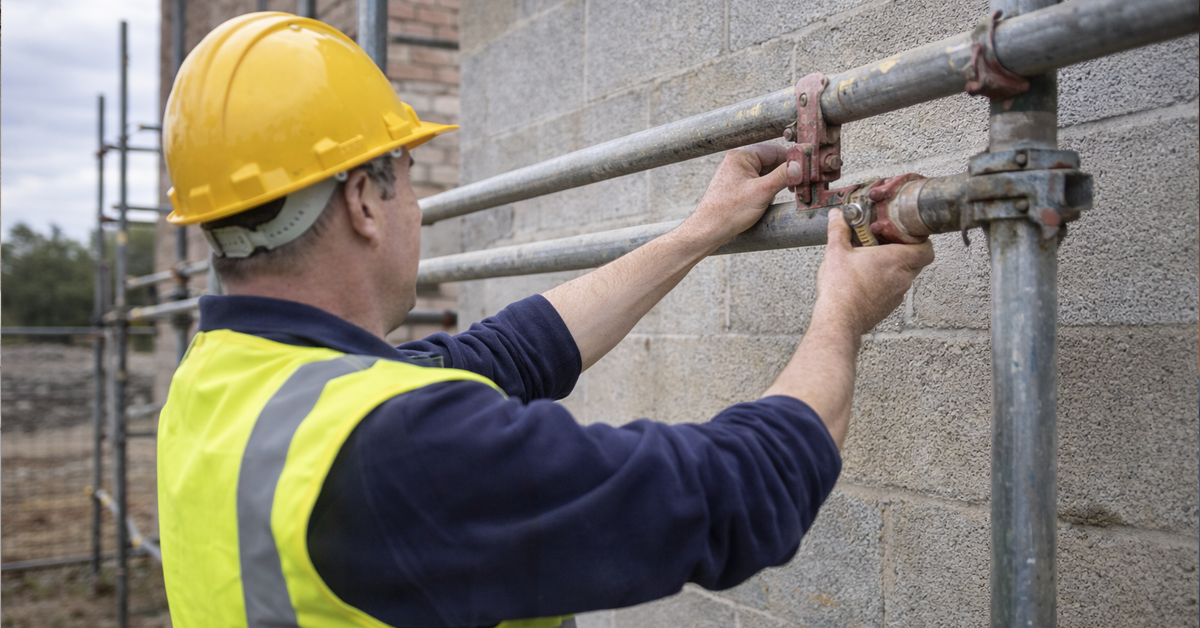
Perhaps the most recognisable type of temporary work, scaffolding provides safe, elevated platforms for trades to work from. It allows bricklayers, cladders, and window fitters to access all areas of a building’s facade safely. Good scaffolding must be professionally designed to carry the intended loads, which includes people, tools, and materials.
Closely related are other access solutions, such as temporary stairs and walkways, which ensure everyone can move around a complex site without risk. These systems prevent falls and keep the entire project running smoothly. You can learn more about the equipment needed for these essential early stages in our guide to foundation work equipment.
Haul Roads and Crane Pads
Heavy machinery is the lifeblood of a modern site, but it needs stable ground to operate safely and effectively. This is where haul roads and crane pads come in.
A haul road is a temporary roadway built on-site to let heavy vehicles like dumpers and lorries move materials without churning up the ground or getting bogged down. They are often built from compacted stone or specialised track mats.
- Haul Roads: These create a reliable path for moving bulk materials, like spoil from foundation digs.
- Crane Pads and Piling Mats: These are engineered platforms designed to spread the massive point loads from a crane’s outriggers or a piling rig’s tracks. They stop the machine from sinking and becoming dangerously unstable.
Without these temporary ground solutions, a wet winter in East Anglia could easily bring a project to a grinding halt. It is a perfect illustration of how vital temporary works are for keeping a site productive.
The Legal Framework and UK Standards
When it comes to temporary works, cutting corners is not just bad practice, it is illegal. In the UK, a solid legal framework exists to make sure these structures are managed properly, preventing accidents and ultimately saving lives. Getting this right is not just a box-ticking exercise; it is a fundamental duty for everyone involved on a construction site.
The two most important documents you need to know are the Construction (Design and Management) Regulations 2015 (CDM) and the British Standard BS 5975. Think of them as the twin pillars of safe site management. They set out clear duties for clients, designers, and contractors to ensure every temporary structure is correctly designed, managed, inspected, and eventually, dismantled safely.
Understanding these regulations is the first step to running a safe, compliant site. It is about protecting your team and your project from completely avoidable risks.
The Role of CDM 2015
The CDM regulations are all about improving health and safety across the entire construction process, from the first sketch to the final handover. They place legal responsibilities on pretty much everyone involved in a project, making safety a shared goal rather than one person’s problem.
For temporary works, CDM 2015 is absolutely critical. It demands that risks are identified and managed right from the very beginning of the design phase. This means clients, principal designers, and principal contractors all have a legal duty to make sure temporary works are planned and built safely.
- Clients must make sure enough time and money are allocated for managing temporary works safely.
- Principal Designers have to identify, eliminate, or control any foreseeable risks linked to the design of both permanent and temporary works.
- Principal Contractors are responsible for planning, managing, and monitoring the entire construction phase, which includes all temporary works on their site.
This framework ensures safety is baked into the project plan from day one, not just bolted on as an afterthought.
BS 5975: The Code of Practice
While CDM provides the legal “what,” BS 5975:2019 provides the practical “how.” It’s the approved Code of Practice for temporary works procedures and the management of falsework. If you follow this standard, you are generally considered to be complying with your legal duties under CDM. Simple as that.
BS 5975 lays out a clear process for controlling temporary works, including appointing competent people to specific roles, like the Temporary Works Coordinator (TWC). It gives you a procedural map covering everything from the initial design brief to the final sign-off and removal.
BS 5975 is the industry’s go-to guide for managing temporary works. Its procedures are designed to prevent failures by ensuring every stage, from design checks to on-site inspections, is properly controlled and documented.
The standard also stresses the importance of a Temporary Works Register, a live document that tracks every single piece of temporary works on a project. This register makes sure nothing gets missed and that all necessary checks and inspections are done on time. This is exactly why having a partner who understands these requirements is so important for projects across Norfolk and Suffolk.
Meeting Modern Compliance Demands
The rulebook is always evolving. For instance, the 2022 Building Safety Act, introduced after the Grenfell Tower fire, now requires “golden thread” documentation for temporary works on high-rise sites. This increases the need for thorough design verification. With private housing repair and maintenance work booming, dependable suppliers like Aylsham Plant Solutions ensure groundworks packages for housebuilders do not get held up by skills shortages. This helps to keep Suffolk renovations and Norfolk infrastructure projects on schedule. For more data on these trends, you can explore the latest official statistics on construction output.
Working with a knowledgeable partner who provides well-maintained plant and skilled operators helps clients meet these legal duties head-on. It turns compliance from a headache into a streamlined part of a successful project, massively reducing risk and keeping your team safe on site.
Key Roles and Responsibilities on Site
To keep temporary works safe and under control, UK regulations demand a clear chain of command on site. You simply cannot leave critical engineering tasks like shoring or formwork to chance. This is where the British Standard BS 5975 comes in, establishing a formal procedure that insists competent people are appointed to specific roles.
Getting your head around this hierarchy is vital for anyone running a construction site, whether it is a small groundworks job in Suffolk or a major infrastructure scheme in Norfolk. It guarantees that every stage, from the initial idea to the final removal, is properly planned, checked, and supervised by someone with the right skills.
Think of it like a film crew. You have got a scriptwriter to create the plan, a director to oversee the whole production, and an on-set manager making sure everyone follows the script on the ground. The management of temporary works is not so different.
The Temporary Works Designer: The Scriptwriter
The Temporary Works Designer (TWD) is the engineer who draws up the technical plan. It is their job to design a solution that is not only safe and practical but also perfectly suited to the project’s needs. They are the ‘scriptwriter’, producing the detailed drawings, calculations, and instructions that everyone else on site will follow.
A TWD has to be a competent engineer with proven experience in the type of temporary works being designed, whether it is a complex shoring system for a deep basement dig or a simple load-bearing platform for heavy plant.
Their core responsibilities include:
- Producing a clear, detailed design brief.
- Making sure the design complies with all relevant standards and regulations.
- Identifying potential risks in the design and outlining safe methods for both construction and dismantling.
Without a solid design from a qualified TWD, the whole process is built on a shaky foundation. Their expertise is what turns a site challenge into a safe, engineered solution.
The Temporary Works Coordinator: The Director
The Temporary Works Coordinator (TWC) is the central figure who manages the entire process on site. Appointed by the principal contractor, the TWC is the ‘director’ of the whole operation. They do not usually design the works themselves, but they are responsible for ensuring a suitable design is prepared, checked, and correctly put into practice.
This role is absolutely essential for maintaining control and clear communication. The TWC oversees everything, from appointing the designer right through to signing off the final structure before it is used. This person needs to be competent, with the training, experience, and authority to manage the process from start to finish.
The TWC is the lynchpin of safe temporary works management. Their primary role is to ensure that the approved procedure is followed for all temporary works on site, creating a clear line of command and accountability.
On any project we handle in Norfolk or Suffolk, the TWC ensures all temporary works, be it formwork for a new build or a haul road for our dumpers, are managed according to one consistent, safe procedure. This coordination stops confusion in its tracks and massively reduces the risk of mistakes.
The Temporary Works Supervisor: The On-Set Manager
While the TWC has the overall responsibility, the Temporary Works Supervisor (TWS) is their eyes and ears on the ground. The TWS is the ‘on-set manager’, responsible for directly supervising the erection, use, maintenance, and dismantling of the temporary works exactly as the designer intended.
This is a hands-on role. The TWS works directly with the site team to make sure the structure is built precisely to the design drawings. They are also in charge of carrying out regular inspections and have the authority to stop work immediately if they spot anything unsafe.
The table below breaks down how these three crucial roles fit together to keep sites safe and compliant.
Key Temporary Works Roles Compared
This simple structure clarifies who does what, ensuring everyone knows their part in maintaining a safe site.
| Role | Primary Responsibility | Key Focus on Site |
|---|---|---|
| Designer (TWD) | Creates the safe and compliant engineering design for the temporary works. | Focuses on technical calculations, drawings, and risk mitigation before work begins. |
| Coordinator (TWC) | Manages and coordinates the entire temporary works process from start to finish. | Oversees procedures, documentation (like the register), and ensures all roles are fulfilled. |
| Supervisor (TWS) | Supervises the on-the-ground installation, inspection, and removal of the works. | Ensures the physical build matches the design and that it remains safe throughout its use. |
This clear structure of roles is not just best practice; it is the industry standard for preventing failures. Having these competent individuals in place is mandatory for managing risk and ensuring the safe execution of what is temporary works in construction.
How to Manage the Temporary Works Lifecycle
Getting a project over the line successfully comes down to having a solid, well-managed process. When it comes to temporary works, this is not just good practice, it is a safety-critical requirement. Managing the entire lifecycle, from the first sketch to the final removal, ensures every step is controlled, checked, and compliant. It is the only reliable way to prevent failures, protect your team, and sidestep costly delays.
Let’s walk through the key stages of a typical temporary works lifecycle, looking at the practical steps and where expert support really makes a difference.
Stage 1: Planning and Design Brief
Everything starts with a clear plan. Long before a single bucket of earth is moved or any steel is ordered, a Temporary Works Design Brief needs to be created. Think of this document as the project’s DNA. It outlines exactly what the temporary works need to do, the loads they must support, and the specific site conditions, like the ground stability in Norfolk or coastal wind exposure in Suffolk.
During this planning phase, selecting the right equipment is vital. Knowing you will need a certain type of excavator or dumper, for example, directly informs the design of haul roads and working platforms. Our team can provide crucial advice here, ensuring the plant you hire is perfectly matched to the design brief from day one.
Stage 2: Design and Verification
Once the brief is nailed down, a competent Temporary Works Designer (TWD) gets to work creating the engineering solution. This includes detailed drawings, calculations, and a clear method statement for both installation and dismantling. The design has to be robust enough to handle all foreseeable loads and environmental factors without breaking a sweat.
A crucial part of this stage is the Design Check. This is not optional. An independent, qualified engineer must review and verify the TWD’s design to confirm its structural adequacy and compliance with UK standards. This second pair of eyes is a non-negotiable step that catches potential errors before they ever make it to site.
This infographic shows how the key on-site roles flow together, from the designer’s initial plan right through to the supervisor’s on-the-ground checks.

This structured approach makes sure that design, coordination, and supervision are all seamlessly integrated, minimising risk from start to finish.
Stage 3: Erection and Supervision
With an approved design in hand, the physical work begins. This is where the Temporary Works Supervisor (TWS) takes charge, making sure the erection team follows the design drawings and method statement to the letter. Using the right machinery, operated by skilled professionals, is critical for a safe and accurate installation.
Hiring plant with one of our certified operators takes the guesswork out of it. They understand how to manoeuvre machinery safely around sensitive structures, ensuring the temporary works are installed without compromising their integrity. For robust protection throughout the temporary works lifecycle, this guide on comprehensive security for a construction site offers some valuable insights.
Stage 4: Inspection and In-Use Monitoring
Once erected, the Temporary Works Coordinator (TWC) formally inspects the structure and issues a “permit to load” or similar authorisation before it can be used. But this is not a one-off check. Regular inspections must continue throughout its service life to spot any signs of damage, movement, or wear and tear.
Continuous monitoring is vital. Site conditions can change, and what was safe on day one might not be safe on day thirty. A formal inspection schedule, all documented in the Temporary Works Register, is essential.
The consequences of getting this wrong are severe. According to industry data, temporary works failures were responsible for 25% of all structural collapses on UK construction sites between 2000 and 2020. Closer to home, HSE statistics show that in 2023, 420 temporary works inspections were carried out across Norfolk and Suffolk, with 37% flagged for overload risks.
Stage 5: Dismantling
Finally, once the permanent structure is standing on its own two feet, the temporary works can be removed. This process needs to be planned and managed with the exact same level of care as the erection. A safe sequence for removal is essential to avoid accidentally overloading parts of the permanent or temporary structure as it comes down.
Partnering for Safe Projects in Norfolk and Suffolk
Getting temporary works right is not just about ticking a regulatory box; it is the very foundation of a safe, efficient, and successful construction project. From the simplest trench support to a sprawling shoring system, these engineered solutions are non-negotiable for protecting your team and keeping your project moving.
A failure at this stage is not a minor setback. It can lead to dangerous accidents, crippling delays, and serious legal consequences.
At Aylsham Plant Solutions, we provide the reliable partnership you need to get this critical aspect right. Our deep experience serving Norfolk and Suffolk means we have a genuine understanding of the local ground conditions and project challenges specific to our region. We do more than just supply machinery; we deliver a complete support system for your entire project.
The Right Equipment and Expertise
Our services are built to support every phase of the temporary works lifecycle. We provide a modern, well-maintained fleet of plant, including advanced GPS-enabled equipment that brings a huge boost in accuracy to groundwork and earthworks. This precision helps ensure your temporary structures go in exactly as designed.
To support this, we also offer:
- Comprehensive Plant Hire: A wide range of machinery, from mini-diggers for tight spaces to heavy excavators for bulk earthmoving. You can find out more by exploring our guide to excavator hire in your area.
- Skilled Operators: Our fully trained and certified operators ensure equipment is used safely and effectively, which is vital for reducing risk during the critical installation phase.
- Contract Groundworks: We can act as your turnkey partner, managing everything from site preparation and drainage to foundation work, ensuring all temporary works are handled professionally.
Choosing a partner with local knowledge and a solid commitment to safety is your best defence against the risks that come with temporary works. It turns a complex responsibility into a manageable, controlled process.
By combining top-tier equipment with deep industry expertise, we help you meet your legal duties and build with confidence. For expert advice on your next project in Norfolk or Suffolk, get in touch with our team today.
Your Questions Answered: Temporary Works Explained
Here are some quick answers to the common questions we get asked about temporary works. These points clear up any confusion around responsibilities, costs, and day-to-day procedures on site.
Do Temporary Works Apply to Small Jobs Too?
Absolutely. The principles of managing temporary works apply to every single construction project, no matter the size. A small domestic extension obviously will not need the same complex engineering as a new bridge, but any element used to support a structure or excavation still counts. That includes basic props holding up a floor or simple shoring in a small trench.
The key is that the solution must be safe, stable, and fit for purpose. How much design, coordination, and supervision is needed should always be proportional to the risk involved. So, while you might not need a full-time Temporary Works Coordinator on a small job, someone still has to take responsibility for making sure it is all safe.
Who Is Ultimately Responsible for Temporary Works on Site?
Under UK law, specifically the CDM Regulations 2015, the Principal Contractor has the overall responsibility for managing health and safety on site. This includes all temporary works. It is their legal responsibility. However, that duty is shared across the project team.
Several key people have distinct responsibilities:
- The Client: They must make sure enough time and money are allocated for temporary works to be managed safely from the outset.
- The Designer: Has a duty to reduce risks through their designs for both the permanent and temporary structures.
- The Principal Contractor: Manages the whole process, which includes appointing a competent Temporary Works Coordinator (TWC).
- The TWC: Is the person on the ground responsible for the day-to-day coordination and control of the temporary works procedure.
How Much Do Temporary Works Typically Cost?
The cost of temporary works can vary enormously depending on how big and complex the project is. As a rough guide, you can expect temporary works to account for 8% to 12% of a project’s total budget. For really complex groundworks or civil engineering projects, that figure can easily be higher.
The main things driving the cost are the complexity of the permanent structure, the local ground conditions, how long the project will run, and the specific types of temporary structures you need. For example, deep excavations needing extensive trench shoring will cost a lot more than simple propping for a concrete slab.
Investing in proper design, quality equipment hire, and competent management right from the start is always cheaper than dealing with the financial and human cost of a failure. A well-planned approach stops delays in their tracks and keeps everyone safe.
For expert advice and reliable equipment for your next project, trust Aylsham Plant Solutions. We provide the dependable plant hire and groundworks support you need to manage temporary works safely and efficiently across Norfolk and Suffolk. Visit us at https://aylshamplantsolutions.co.uk to learn more.
Related Posts